

If you’re planning a trip to Sajek Valley, the first thing you need to know is that it’s not a quick getaway from Dhaka. It’s a full-day journey, and the road conditions can test your patience. But the payoff is a landscape that feels completely different from the rest of Bangladesh.
Key Takeaways
- Sajek Valley is a remote hill tract in Rangamati, accessible only by road via Khagrachhari; the journey from Dhaka takes 8-10 hours by bus plus a 2-3 hour drive uphill.
- Public transport options are limited; most visitors hire a private jeep or CNG for the final leg from Khagrachhari to Sajek.
- Accommodation is basic but scenic, with cottages and tents offering views of the hills and clouds; book ahead during peak season (November to March).
Start in Dhaka. Several bus companies, including Shyamoli, Saint Martin, and Hanif, run daily services to Khagrachhari. The journey takes about 7 to 8 hours, depending on traffic and road conditions. Buses depart from both Gabtoli and Sayedabad terminals. Fares range from 600 to 1,200 BDT, depending on the type of bus. It’s wise to book a seat a day in advance, especially on weekends.
Once you arrive in Khagrachhari, you’re still far from Sajek. The remaining 70 kilometers climb into the hills, and it takes roughly 2 to 3 hours by jeep. There’s no public bus that goes directly to Sajek. Most travellers share a jeep, which costs around 300 to 500 BDT per person. If you’re in a group, hiring a whole jeep costs between 2,500 and 4,000 BDT. The road is winding and often bumpy, with steep drops in places. It’s not for the faint-hearted, but the views of the valleys and tea gardens keep your mind off the jolts.
Sajek Valley sits at an altitude of about 1,800 feet, making it one of the highest points in Bangladesh. The weather is noticeably cooler than the plains, especially from November to February. Nights can drop to 10°C or lower, so pack a jacket or a warm sweater. During the monsoon, from June to September, the road can become slippery, and landslides occasionally block the route. It’s best to avoid travelling during heavy rain.
Once you’re in Sajek, the main settlement is a cluster of cottages and viewpoints. Most visitors stay in one of the many guesthouses or resorts that line the ridge. Prices range from 1,500 to 5,000 BDT per night, depending on the season and the view. Book ahead if you’re visiting during the winter holidays or on weekends, as places fill up fast. Many cottages offer meals, typically simple Bangladeshi dishes like rice, dal, and fried fish. There are also a few small restaurants and tea stalls.
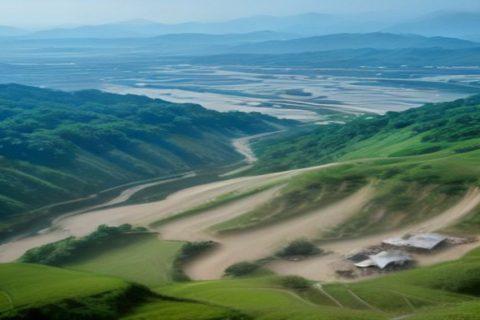
The main attraction is the view itself. On clear days, you can see the hills of India’s Mizoram state in the distance. The valley below is often filled with clouds in the early morning, creating a sea of white. The villages around Sajek are home to the Marma and Chakma communities, and you can walk through them, though it’s respectful to ask before taking photos. There’s also a small Buddhist temple and a few viewpoints like Konglak Hill and the Sajek viewpoint, which are reachable on foot or by local CNG.
Getting back to Dhaka is just as straightforward. You’ll need to return to Khagrachhari by jeep, which can be arranged through your accommodation. Then catch a bus back to Dhaka. Buses run throughout the day, but the last one usually leaves around 5 PM. If you miss it, you might have to stay overnight in Khagrachhari, which isn’t a bad option if you have the time.
Mobile network coverage in Sajek is spotty. Grameenphone and Robi have some signal, but it can be unreliable. Don’t rely on internet access. Cash is king here; there are no ATMs in Sajek, so withdraw enough money in Khagrachhari or Dhaka before you go.
Safety-wise, Sajek is generally peaceful, but the roads are the biggest risk. Hire a driver who knows the route well, and avoid travelling after dark. The last stretch from Khagrachhari to Sajek is best done in daylight. Also, be aware that some areas near the border are restricted, so stick to the main tourist spots.
One more thing: Sajek is not a place for a strict itinerary. The weather can change your plans, and the slow pace is part of the charm. Give yourself at least two days to soak it in. If you’re coming from Dhaka, a typical trip spans three days: one day to get there, one full day to explore, and one day to return.
Transport Options from Dhaka to Khagrachhari
Several bus companies operate on the Dhaka-Khagrachhari route. Shyamoli, Saint Martin, and Hanif are reliable names. They depart from both Gabtoli and Sayedabad terminals. The journey takes 7 to 8 hours, with a break for lunch. Fares range from 600 to 1,200 BDT depending on the bus type. Book your ticket a day in advance, especially on weekends. You can also take a train from Dhaka to Feni or Comilla, then a bus to Khagrachhari, but that’s more complicated and not faster.
If you prefer a private car, you can hire one from Dhaka for the entire round trip. It costs around 10,000 to 15,000 BDT for a sedan, and more for a microbus or SUV. This gives you flexibility, especially if you want to stop along the way. But the road from Khagrachhari to Sajek is rough, so make sure the car has good clearance.
Where to Stay in Sajek
Accommodation in Sajek is mostly concentrated in three areas: the main ridge near the Sajek viewpoint, the Konglak hill area, and the Ruilui village. The main ridge has the most options, with cottages like Sajek Hill View and Megh Punji offering rooms with balconies facing the valley. Prices start around 2,000 BDT for a basic room and go up to 5,000 BDT for a deluxe cottage with a view. During peak season (November to March), it’s wise to book a week ahead. Many places include breakfast, and some offer full board.
If you’re on a budget, you can find simple guesthouses in Ruilui village for as low as 500 BDT per night. These are basic, with shared bathrooms, but they’re an authentic experience. You’ll be staying with a local family, and they can often arrange meals for a small fee.
What to Pack and Other Practicalities
Pack layers: it’s warm during the day but gets chilly at night. A light jacket or a fleece is essential from November to February. Comfortable walking shoes are a must, as the terrain is uneven. Bring a power bank, as electricity can be intermittent. Also, carry a flashlight for evening walks.
There are no banks or ATMs in Sajek, so bring enough cash. You’ll need it for accommodation, food, and local transport. Most places don’t accept cards. Also, keep small notes for tips and small purchases.
Internet is slow and unreliable. If you need to work, it’s better to plan for offline tasks. But that’s also the point: Sajek is a place to disconnect and enjoy the hills.
Frequently Asked Questions
How long does it take to get from Dhaka to Sajek?
The total travel time from Dhaka to Sajek is about 10 to 12 hours. This includes 7-8 hours by bus to Khagrachhari, followed by a 2-3 hour jeep ride up the hills. You should plan to leave Dhaka early in the morning to arrive in Sajek before sunset.
Is there a direct bus from Dhaka to Sajek?
No, there is no direct bus. You must take a bus to Khagrachhari and then hire a jeep or share a ride to Sajek. Some tour operators offer combined packages, but they are more expensive.
What is the best time to visit Sajek?
The best time is from November to February when the weather is cool and dry. The skies are clearer, and you can see the hills distinctly. Avoid the monsoon (June to September) because the roads can become dangerous and landslides may occur.
Do I need a permit to visit Sajek?
No, you do not need a permit for Sajek itself, as it’s within the Rangamati district. However, some areas near the border may require a permit, but you won’t be going there as a tourist. Just carry a government-issued ID for hotel check-ins.
Are there ATMs in Sajek?
No, there are no ATMs in Sajek. The nearest ATM is in Khagrachhari town. Make sure to withdraw enough cash before you head up the hill.